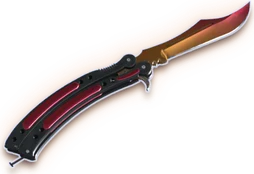


A CS2 StatTrak item carries a small counter on the weapon that ticks up with each kill you get while holding it. As the Counter-Strike wiki notes, StatTrak kills do not transfer between users when the item is traded, so a new owner always starts at zero. Music kits have a StatTrak version too; Valve sells music kit boxes in standard and StatTrak versions.
StatTrak weapon skins come from cases and from trade-up contracts made entirely of StatTrak inputs. Skins in map and themed collections do not come in StatTrak. StatTrak cannot be added to a normal skin after the fact, and a StatTrak skin cannot be turned into a normal one.
How rare is StatTrak?
When a case gives you an item, there is a one in ten chance it is StatTrak. Valve's Chinese publisher Perfect World published that figure in 2017 along with the case odds. It applies at every rarity, so a StatTrak Covert is about ten times rarer than a normal Covert. Knives follow the same rule. Gloves do not come in StatTrak at all: every glove in the ByMykel item dataset is normal quality only.
That scarcity is why StatTrak versions cost more, though the premium varies a lot. On cheap skins the gap may be a few cents. On popular rifles and knives it can be a large percentage of the price.
Does StatTrak affect trade-up contracts?
Yes. Steam Support's trade-up page says normal skins cannot be used with StatTrak skins and vice versa. Ten StatTrak inputs give a StatTrak output, and you cannot mix even one normal skin into that contract. Since the October 2025 update, five StatTrak Covert skins can also be traded up into a StatTrak knife, but never into gloves. This makes StatTrak trade-ups a separate market with its own input prices and expected value.
StatTrak has no effect on gameplay beyond the counter. Some players value a high kill count on their own item, but it adds nothing at resale because the count resets. A seller who asks extra for a high counter is asking for a premium that vanishes on delivery.