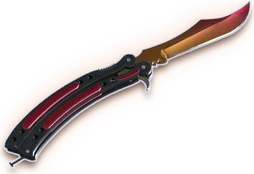


Industrial Grade is one step above Consumer Grade in the CS2 rarity system. The label is light blue, so traders call these skins "light blues" to keep them apart from the darker blue of Mil-Spec. Like Consumer Grade, Industrial Grade skins come from map collections and weekly care packages rather than from weapon cases.
Most Industrial Grade skins are cheap. Many sell for well under a dollar on the Steam Community Market. A small number from older collections are scarcer and get bought for trade-ups, and those can cost a few dollars or more.
How does Industrial Grade fit into trade-up contracts?
Industrial Grade is the second rung of the trade-up chain. Ten Consumer Grade skins produce one Industrial Grade skin, and ten Industrial Grade skins produce one Mil-Spec skin. This makes Industrial Grade a popular middle step. Traders pick inputs from collections whose Mil-Spec outputs are worth more than the ten inputs, then run the contract and hope the outcome lands on a good skin.
The output skin's float depends on the floats of the inputs. Lower input floats push the result toward Factory New, which is often where the profit is. That is why traders check float values before buying Industrial Grade inputs, even when the inputs themselves are worth very little.
Which Industrial Grade skins are worth the most?
Value comes from three things: how rare the skin's collection is, what the trade-up outputs look like, and the float and pattern of the copy. A Factory New Industrial Grade skin from a retired collection can be worth far more than a Battle-Scarred copy from a collection that still drops. Check recent sales rather than the listed price, since thin markets show big gaps between the ask and what actually sells.