

What happens to sticker capsule prices after a Major?
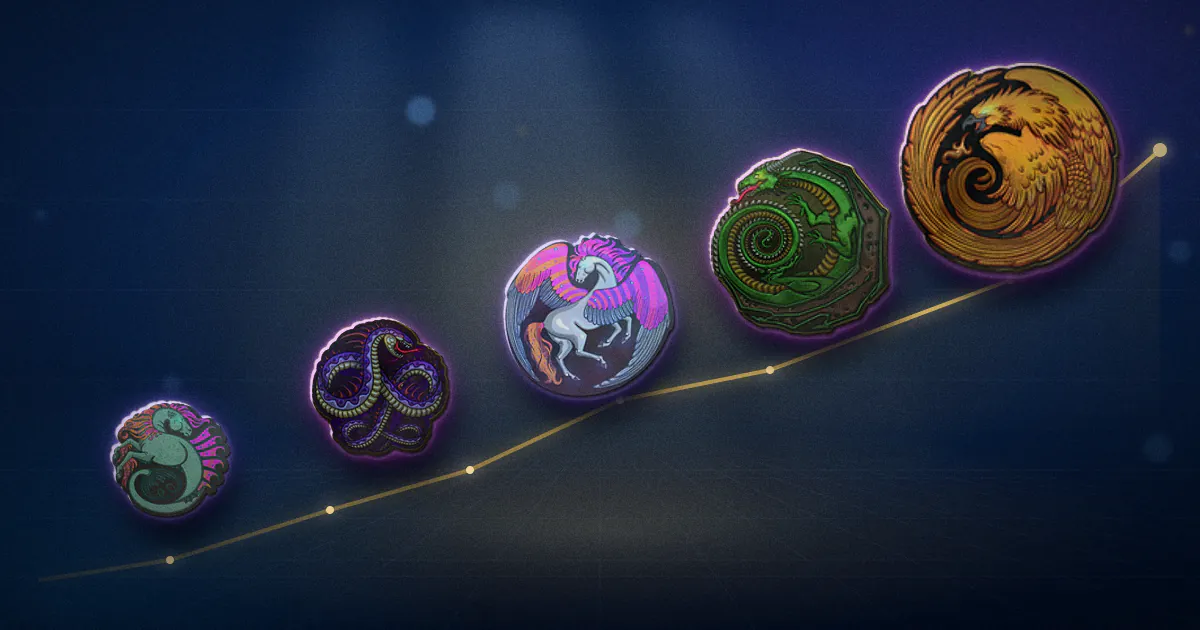
For every Major up to Budapest 2025, the pattern was the same in outline. Valve sold sticker capsules in the game during and after the event. Months later it discounted them, announced a last day, and removed them. From that day the number of capsules could only go down, because opening one destroys it. With a fixed and shrinking supply and a player base that kept growing, prices of the older capsules drifted upward over years, sometimes a lot.
That pattern is the reason "Major capsule investing" exists as a phrase. It has also just been broken. For the IEM Cologne 2026 Major, Valve stopped selling capsules and sells stickers directly from a Major Shop. So this guide does two things: it explains the historical pattern honestly, including where it failed, and it explains what the 2026 change means for anyone holding or thinking about capsules.
This is an investing-cluster guide. Read are CS2 skins a good investment for the full risk picture before acting on anything here.
How does a Major capsule's life cycle usually run?
Using the pre-2026 Majors as the model, a capsule went through five phases.
| Phase | When | What happened to price |
|---|---|---|
| On sale | During the Major and for months after | Fixed price in the game store; market price at or below it, since anyone could buy new |
| Discount | Weeks to months after the event | Valve cut the store price steeply; market price fell to match; heavy buying by holders |
| Removal | An announced last day | Store supply ends; market price started at roughly the discounted level |
| Slow drift | The following years | Supply shrank as capsules were opened; price rose with demand, unevenly |
| Collectible | Many years on, for the memorable events | Prices far above the original store price for the scarce, well-loved sets |
Valve documented the discount step for the most recent capsule Majors. The 15 January 2025 release notes say "Shanghai 2024 Major sticker capsules are now on sale for 75% off", about six weeks after that Major ended. Community reporting says the Austin 2025 and Budapest 2025 capsules followed similar sale-then-removal steps.
Two things about that table are easy to miss. The market price during the on-sale phase is capped by the store, so there is no upside until removal. And the discount phase is when most holders buy, which means the "starting price" for the long drift is the discounted price, not the original one.
Why do discontinued capsules rise?
Three forces, and all three have to keep working for the rise to continue.
Supply only falls. After removal, nobody can make a capsule. Every capsule opened for its stickers is gone. Over years, a large share of a Major's capsules gets opened, especially the cheap ones, because people want the stickers on their guns. What remains is the sealed supply.
Demand grows or holds. More players, more collectors, and the passage of time turning an event into a memory. Stickers from a Major that produced a famous moment, a famous team, or a famous player carry that story.
The stickers themselves rise. A capsule is a random draw from its sticker list. Its price is anchored to the value of what it can contain. If the top stickers in the set rise, the capsule follows, at a discount for the randomness.
Where any of the three fails, the rise stalls. Majors with enormous capsule sales have a supply that takes many years to shrink. Majors that were forgettable get less collector demand. And sets with no standout sticker have no anchor pulling the capsule up. The pricing pillar covers these supply and demand mechanics in general.
What decides which capsules rise the most?
Looking at how past capsules have behaved, the same handful of factors keep showing up.
- How many were sold. Fewer sold means faster scarcity. Early Majors sold far fewer capsules to a much smaller player base, which is most of why they are worth so much now.
- How memorable the event was. A Major with an iconic final or a first-time champion holds attention for years.
- Which teams and players are in the set. A capsule containing a team that later became a dynasty, or a player who became a star, gets pulled up by those stickers.
- Which sticker tiers the capsule holds. Legends, Challengers and Contenders capsules for the same Major can behave differently, depending on which teams landed where. Autograph capsules follow the players in them.
- Whether people opened them. A set with stickers people love to apply gets opened more, shrinking supply faster. A set nobody applies stays sealed, and the sealed supply stays large.
Katowice 2014 is the extreme: tiny sales, an early and now legendary event, stickers that were applied in huge numbers when they cost pennies, and a survivor pool that collectors fight over. Our guide on sticker value explained shows what those stickers do to the price of a skin they are on. It is the best case in the history of the market, which also makes it a poor thing to plan around.
What changed with the IEM Cologne 2026 Major Shop?
On 22 May 2026, Valve announced the Cologne 2026 tournament items and did not sell capsules. From the announcement: "The Major Shop has undergone some major renovation--now you can directly get any sticker you want (at prices set by demand)." Players buy tokens, then redeem them for specific stickers. Prices move with demand: "if one sticker is purchased disproportionately more than another, its price will go up and the other sticker's price will go down."
Valve gave two reasons in the FAQ. Players had said they would rather buy stickers directly than pull them from packs, and "players in certain regions cannot purchase sticker capsules." The same update replaced souvenir packages with the Souvenir-O-Matic, which turns a weapon you already own into a Souvenir tied to a match and a player, with gold stickers applied. Royalties stayed at 50% of shop and pass revenue shared with the organiser, teams and players, with a new performance-based split.
For anyone thinking in terms of the old capsule pattern, this changes three things:
- No capsule to hold for Cologne 2026. The vehicle that used to carry the post-Major rise does not exist for this event.
- Sticker supply is set by buyers, not by pack odds. A sticker's total supply is however many people bought it while the shop was open. Popular stickers could end up plentiful; unpopular ones scarce.
- Old capsules are unaffected. Every earlier Major's capsules still exist, still trade, and still cannot be made again. If anything, they are now the last of their kind, though "last of their kind" is a story, not a price.
Valve called the shop something it is "exploring", so future Majors may change again. Anyone holding stickers or capsules should expect the format to keep moving.
What are the risks of holding Major capsules?
The same risks as any skin, plus a few specific to capsules.
- Valve changes the rules. The 2026 shop is the proof. Valve could also re-release old stickers, change how stickers work, or alter what a capsule can contain. It has never re-released a Major capsule, but nothing prevents it.
- You do not own the capsule. Under the Steam Subscriber Agreement, items are licensed, not sold. See are CS2 skins a good investment for what that means.
- Demand can fade. A Major that seemed memorable can be forgotten. A star can retire and be replaced in the collective memory.
- Slow. The drift takes years. Money in capsules is money you cannot use for years without giving up the reason you bought them.
- Thin at the top. The expensive old capsules have few buyers. Selling several at once can move the price against you.
- Fees. Selling on the Steam Market costs 5% plus 10%, per the Community Market FAQ, and pays in wallet funds. Selling for cash costs a marketplace fee and a lower price.
- Account risk. A hijack can take them all, with only the 7-day trade protection window to undo it.
None of this means capsules cannot rise. It means the rise is not owed to you, and the path to it runs through a company that changes its mind.
How do fees and timing affect capsule returns?
The round trip matters more for capsules than for most items, because the per-unit price is often low and the holding period is long.
Buy a capsule at the discounted price. Hold it for three years. Sell it for double. On the Steam Market, the 15% fee takes a chunk of that, and the proceeds are wallet credit you cannot withdraw. On a cash marketplace, the price is lower than Steam's and the site's fee comes off. The trade profit calculator puts the whole trip together, and the Steam fee calculator shows the Steam-only version. Run both before you buy, because a "double" that becomes 60% after fees and the cash discount, over three years, is not the return it sounded like.
Timing is the other lever. Buying at full store price during the Major means paying the most anyone will pay for that capsule for a long time. Buying at the discount means a lower base. Buying after removal means competing with everyone who had the same idea. And selling into a spike, such as when a team from an old capsule wins a new Major and their old stickers get attention, has historically beaten selling on a quiet day.
How would a careful person approach Major capsules?
If you understand the risks and still want exposure, careful looks like this.
- Use money you can leave alone for years and lose entirely. The drift is slow and the rule risk is real.
- Know the supply. Prefer capsules that sold less, from Majors people remember, with stickers people apply.
- Buy at the discount, not the launch. The store discount before removal has been the best entry point in the recorded history of capsules.
- Hold in your own inventory, secured. Not on a third-party site.
- Model the exit with fees. Decide now whether you will sell on Steam for credit or on a marketplace for cash, and calculate the return on that basis.
- Assume the format keeps changing. The 2026 shop was the first big change. It will not be the last.
- Do not confuse this with case opening. Opening capsules for stickers is a random draw with a house edge in the form of the sticker table. Holding sealed capsules is speculation. Mixing them turns the second into the first.
For the parallel story on cases rather than capsules, including the Armory and the rare drop pool removal, read how case drop pool changes affect prices. The forces are the same. So are the risks.